Hydro Jetting in Columbia, PA
High-pressure water that scours grease, scale and roots from the whole pipe wall.
Calls may be recorded for quality and dispatch. Details
- Calls answered 24/7
- Pricing explained before work
- Experienced local pros
- Ask about the pro's workmanship guarantee
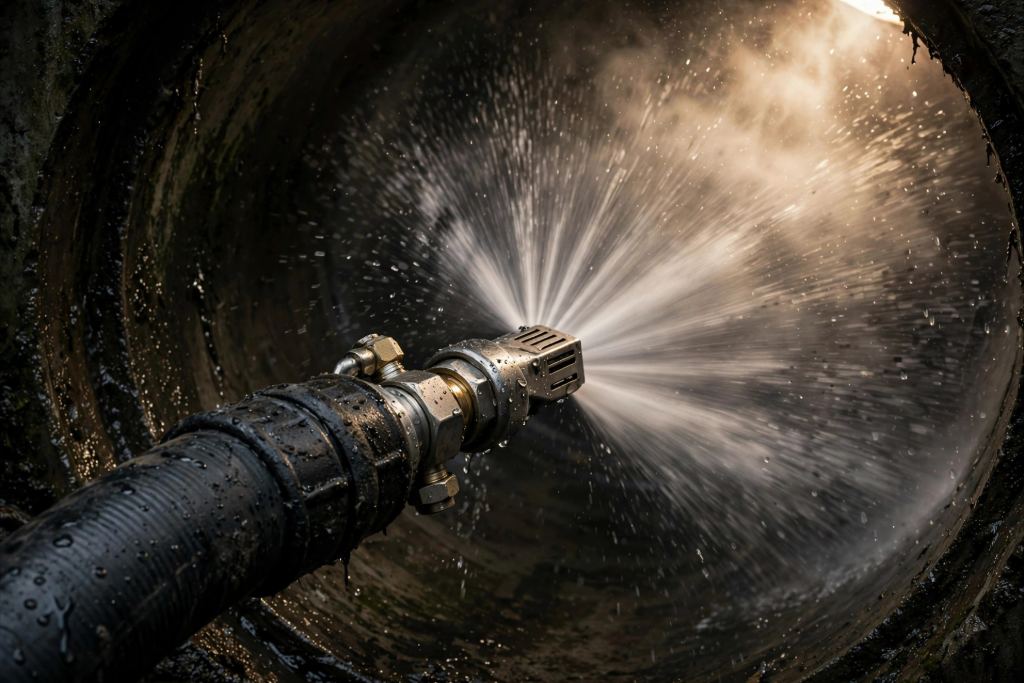
Hydro jetting in Columbia, PA is the heavy-duty answer to a line that keeps clogging. Where a cable punches through buildup, a jetting nozzle scours the full inside of the pipe with high-pressure water, stripping away grease, scale and roots along the whole run. One call connects you with an experienced local drain cleaning pro who can tell you whether jetting is right for your line.
- Scours grease, scale and roots from the full pipe wall
- Reaches buildup that cabling leaves behind
- Calls answered 24/7 with pricing explained before any work begins
What Hydro Jetting Actually Does
A hydro jetting nozzle goes into the line on a high-pressure hose. Water jets fire backward and forward as the nozzle moves through the pipe: the rear jets pull it along and flush debris back toward the access point, while the forward jet breaks up the blockage ahead. The result is a pipe wall stripped back toward its original diameter, not just a hole punched through the clog.
Jetting is a cleaning method, not just a clearing method. Cabling restores flow; jetting restores the pipe. That distinction matters for lines that clog again and again, because each cable clearing leaves the coating that the next clog grows on. When buildup is the pattern, jetting breaks the pattern.
Hydro Jetting Drain Cleaning vs Cabling
Cabling and jetting solve different problems. A cable is the right tool for a discrete blockage: a root mass at one joint, a wad of paper, a single hard clog. It is fast, it reaches far, and it handles most routine clogs. Jetting is the right tool for distributed buildup: grease coating a whole branch, scale narrowing an old line, or sludge settled along a long run. When basement floor drains keep backing up from a coated main, a floor drain cleaning visit pairs naturally with a jetting pass.
The visits differ in scope too. Jetting needs proper access, enough water supply and a technician who knows how to read the line, so it is a bigger job than a cable clearing. A good pro does not default to one or the other; the choice follows what is actually in the pipe. If you have had the same line cabled twice and it keeps slowing, ask on the call whether jetting fits your situation.
Grease, Scale and Roots: What Jetting Removes
Grease is jetting's best case. Hot high-pressure water melts and strips the fatty coating that cables only poke through, flushing it out of the line instead of leaving it to re-harden. Kitchen branches that clog every few months are the classic jetting candidates, especially in homes where the whole family cooks daily. This is what jetting grease and roots out of a line really means: the wall itself gets clean.
Scale, the mineral crust inside old metal pipes, also yields to jetting, and root hairs get shredded and flushed out. Laundry lines benefit too: lint from the washer combines with soap residue into a felt-like coating inside the standpipe and branch, and jetting strips it where cables only poke through. Homes that run several loads a day build this coating faster than the line can shed it. What jetting cannot do is fix a broken pipe: it cleans the inside, it does not repair cracks, collapsed sections or separated joints. That limit is exactly why the camera goes in first.
When Jetting Is Not the Right Choice
High-pressure water and fragile pipe do not mix. Old clay tile with missing sections, cast iron thinned by decades of corrosion, or any line with a known break can be damaged further by jetting pressure. A responsible pro rules these out before the nozzle ever goes in, which is why the camera inspection is part of doing the job properly, not an add-on.
Jetting is also the wrong tool for a simple local clog. A hairball at a tub stopper does not need a high-pressure wash; it needs a cable and a few minutes. If someone recommends jetting for a single slow fixture with no history of repeat clogs, get a second opinion on the call. The right method follows the diagnosis, never the other way around.
Water Jetting Sewer Line Work Starts With a Camera
Every proper water jetting sewer line job begins with a look inside. The camera shows the pipe's material and condition, where the buildup sits, and whether anything is broken that jetting would make worse. It also gives a before picture, so after the jetting pass the camera goes back in and proves the wall is actually clean.
That before-and-after matters because you cannot see inside your own pipes. A drain camera inspection turns a trust-me claim into something you can watch on the monitor. After jetting, the same inspection confirms the line is clear end to end. We connect you with experienced local pros who explain what the camera shows in plain language, with pricing explained before any work begins.
What a Jetting Visit Looks Like, Start to Finish
The visit starts at the cleanout, not the fixture. The technician locates the best access point, usually a basement cleanout, and sets up the jetting unit with its water supply. Before the nozzle goes in, the camera goes in: a quick inspection confirms the pipe is sound and shows where the buildup sits heaviest. That footage decides the nozzle type and the pressure, because different buildup calls for different treatment.
The jetting pass itself is methodical. The nozzle advances slowly so the jets have time to strip each section, and the technician watches the return flow at the cleanout to read how the line is responding. Stubborn spots get a second pass. When the water runs clear, the camera goes back in for the after picture, and you see the result on the monitor. The pro then runs fixtures to confirm flow, explains what the camera showed, and leaves the work area tidy. Pricing is explained before any of this begins, so there are no surprises at the end.
Columbia Homes: Where Jetting Helps Most
In West Hempfield's township subdivisions, longer branch runs and full basements mean grease and laundry lint have more pipe to coat, and those long coated runs are ideal jetting candidates. For drain cleaning on the West Hempfield side, good cleanout access in the basement usually makes the jetting setup straightforward.
Near the river, older homes on sloped blocks carry long laterals to the street, and those laterals collect scale and root hairs along their full length. For drain cleaning near the riverfront homes, jetting after a root cabling can clear the full run in a way a cable alone cannot. In the borough's oldest streets, the camera check matters most: clay and cast iron laterals of unknown condition get inspected first, and jetting only proceeds where the pipe is sound.
For any home, the pattern is the same: the camera decides, the jetting cleans, and the after footage proves it. One call starts that process, and the technician explains each step before it happens.
For an overview of every service and the areas we cover, start with drain cleaning in Columbia, PA.
Serving every part of town: Locust Street Corridor, Columbia Riverfront and West Hempfield (Columbia side).
Hydro jetting questions from Columbia homeowners
It is safe for pipes that are sound, including old lines in good condition. It is not safe for fragile or broken pipe, which is why a camera inspection comes first. The technician checks the pipe's condition and will tell you plainly if jetting is wrong for your line.
Yes, the high-pressure water shreds root masses and flushes them out of the line. What jetting cannot do is repair the joint or crack the roots entered through. A camera look after the job shows whether the pipe itself needs attention from a different trade.
Jetting strips the pipe wall back toward its original diameter, so the line starts fresh. What goes down the drain afterwards decides what happens next. No one can promise a clog will never return, but a fully scoured line plus honest habits gives you the strongest result.
They solve different problems. Snaking clears a discrete blockage, like a root mass at one joint. Jetting cleans distributed buildup, like grease coating a whole branch. The right method follows what is actually in the pipe, never the other way around.
Usually not. Jetting needs proper access, enough water supply and room to work, so the technician typically works through a cleanout. Describe your setup on the call and the pro will tell you what access the job needs.
Less than most people expect. The water and debris flush back toward the access point, and the technician contains the work area as part of the job. Ask on the call what to move out of the way beforehand.
The camera rules out broken or fragile pipe that pressure could damage, and it shows exactly where the buildup sits. It also gives a before picture, so the after inspection proves the wall is actually clean. Seeing inside turns a claim into something you can watch.
Only when it needs it, not on a schedule. A line that keeps reclogging with grease or scale is the signal, not the calendar. After seeing your line on camera, the technician can give you a straight opinion on whether jetting fits.
Get your line scoured clean
Hydro jetting in Columbia, PA is the answer when a coated line keeps clogging. Call Columbia Drain Cleaning Co. now, describe your clog history, and get straight answers with pricing explained before any work begins.