Floor Drain Cleaning in Columbia, PA: Basement and Laundry
Basement floor drains and laundry standpipes cleared, and the backup traced to its source.
Calls may be recorded for quality and dispatch. Details
- Calls answered 24/7
- Pricing explained before work
- Experienced local pros
- Ask about the pro's workmanship guarantee
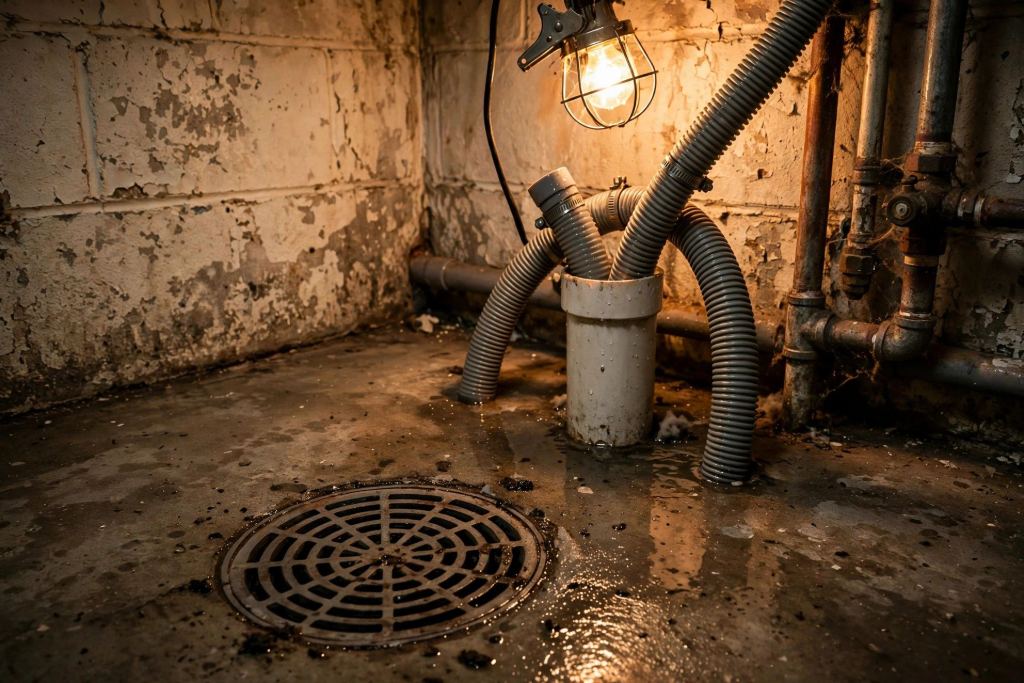
When the washer overflows the standpipe or water creeps up through the basement floor, floor drain cleaning in Columbia, PA is the call that gets the house back to normal. One call connects you with an experienced local drain cleaning pro who knows how basement and laundry lines run in Columbia homes and clears them without tearing the place apart.
Laundry Lint and Standpipe Overflows
The standpipe is the tall, narrow pipe your washer drains into, and it was sized for gentler machines than today's. Modern washers pump water out in a fast surge, and if the laundry line has narrowed with lint and soap film, the surge arrives faster than the pipe can swallow it. The result is the familiar mid-cycle overflow onto the laundry room floor.
Each load adds to the problem invisibly. Fibers catch on the pipe walls, soap residue glues them in place, and the mat thickens until the line's capacity drops below what the washer demands. A lint sock on the drain hose buys time but cannot stop it. When the standpipe overflows more than once, the line needs a professional clearing.
A Basement Floor Drain Clog Often Points Past the Basement
The floor drain sits at the lowest point of your plumbing, which makes it the messenger for problems that start elsewhere. When a washing machine drain overflow or a shower sends a surge down a restricted main line, the water that cannot reach the street comes back up through the floor drain. The drain itself is rarely the culprit.
That is why a repeat backup should not be treated as a floor-drain problem alone. Floor drain cleaning in Columbia, PA starts with questions about the whole house: are other fixtures slow, does the toilet gurgle when the washer drains. The answers point to the basement line or the main, and the fix follows the diagnosis. Clearing only the floor drain when the main line is the issue buys days, not months. If water is actively rising through the floor drain, call for emergency drain cleaning rather than waiting for a scheduled visit.
Why a Laundry Drain Backing Up Is Rarely the Washer's Fault
When water appears around the laundry area, the washer gets the blame, but the machine is almost always innocent. Washers discharge into a clear line reliably for years. What changes is the line: lint mats, soap build-up, and in older homes, rough pipe interiors that snag everything passing through. The washer just exposes the restriction first because it moves the most water the fastest.
One washer-side habit is worth checking: fabric softener and excess detergent leave a waxy film that gives lint something to grip, so using the amount on the package helps the line stay open longer. Beyond that, the fix is mechanical: a pro runs the proper cable through the laundry run and restores the pipe's full diameter. If the line clogs again quickly, a camera look can show whether the main line is contributing.
Dried-Out Traps and Where Basement Smells Come From
Not every floor-drain complaint involves water. A dry or sewer-like smell usually traces to the trap, the U-shaped bend that holds water to block gases. In a rarely used drain, that water evaporates and the seal breaks. Refilling the trap usually restores the seal, and the technician can confirm on the call whether that is the likely cause.
If the odor returns within days of refilling, something else is going on, and that is the point to call rather than keep pouring. A cracked trap, a venting problem, or a partial blockage holding debris can all produce a persistent smell that water alone will not cure. Never pour chemicals into a smelly drain; they cannot fix a trap and they make the technician's work hazardous.
Low-Lying Blocks and Storm-Season Backups
Some Columbia basements sit lower than the street's main line, and during heavy rain those homes feel it first. When the system fills, pressure can push water back toward the lowest drains, and the floor drain becomes the relief valve. This is a general tendency of low-lying blocks, and it explains why a basement that is fine all summer backs up in a stormy week.
What helps is layered. A backwater valve, explained below, is the mechanical defense against reverse flow. Keeping the basement line itself clear matters too, because a half-restricted line needs far less pressure to push back into the house. If storm-season backups are your pattern, mention it when you call.
Backwater Valves, Explained in Plain Terms
A backwater valve is a one-way gate fitted on the drain line where it leaves the house. Water flowing out pushes the gate open; water trying to flow back in pushes it shut. Its one job is keeping the main line's problems on the street side instead of in your basement.
Valves do not suit every home. They need the right location on the line and occasional attention to keep the gate moving, and they cannot fix a line that is already clogged. They are worth discussing when backups arrive from the street side during wet weather. Bring it up during a visit for a straight answer about your layout.
Columbia Homes: Basements, Laundry Lines and Floor Drains
Columbia Borough's older row homes and twins nearly all have basements, with the floor drain usually near the laundry at the lowest corner of the foundation. Those basements carry the borough's classic plumbing: aging lines, shared-wall runs, and floor drains that warn of main-line trouble before any upstairs fixture does. Most calls for drain cleaning across the borough start with one of these basement drains.
The pattern shifts with the housing era. Along the Locust Street corridor, main-street homes and mixed buildings run standpipes through long horizontal stretches before reaching the main, giving lint more pipe to settle in, which is why calls for drain cleaning along the Locust Street Corridor often involve long laundry runs. Around the mid-century borough edges, mid-century homes pair original laundry plumbing with modern washers that surge harder than the old lines were built for.
If the trouble started at the sink instead, kitchen drain cleaning covers grease-packed lines, a different clog with a different fix.
- CallDescribe what the basement or laundry drain is doing. Calls are answered 24/7.
- A few questionsWe ask which fixtures are involved, how often it happens, and whether storms play a part.
- A local pro is dispatchedAn experienced technician who knows Columbia's basement layouts comes with the right cable equipment.
- Upfront pricing firstYou hear the options and the pricing before any work begins, then decide how to proceed.
For an overview of every service and the areas we cover, start with drain cleaning in Columbia, PA.
Serving every part of town: Locust Street Corridor, Columbia Riverfront and West Hempfield (Columbia side).
Basement and laundry drain questions from Columbia homeowners
The standpipe is a narrow drain, and modern washers pump water out faster than a partly clogged line can accept it. Lint, soap residue and sludge narrow the pipe until the water has nowhere to go but up and out. A pro clears the full laundry run so the pipe keeps up with the machine's pump.
Floor drains have a trap that holds water to block sewer gas, and that water evaporates when the drain sits unused. Refilling the trap usually restores the seal. If the odor persists, call, because the trap or the vent may need a professional look.
The floor drain is the lowest opening in most homes, so when the main line is restricted, water takes the easiest path out, which is up through that drain. Laundry day makes it worse because the washer sends a large volume down at once. A backup through the floor drain deserves a prompt call, not a wait-and-see.
Very often, yes. A single slow fixture points to that fixture's own line, but water rising from the floor drain while the washer or a shower runs usually means the main line is restricted. The technician confirms it by checking which fixtures are affected. Call promptly rather than waiting, because a restricted main line only gets worse.
Yes, and it is one of the most common causes of laundry-line clogs. Every load sheds fibers that catch on soap residue and rough pipe walls, building a mat that tightens with each wash. A lint trap on the washer hose slows it down but cannot stop it entirely, which is why laundry lines need clearing every so often.
It is a device fitted on the drain line that lets water flow out of the house but closes to stop water from flowing back in. It is meant for homes where the main line occasionally pushes back toward the basement. Whether your home is a candidate is something to discuss with the technician on the visit.
Do not pour chemical drain cleaner into any drain; it can harm pipes and endanger the technician. A trap that holds water keeps odors out. For actual clogs, the line needs a professional clearing, not a product.
In many cases yes, with same-day and emergency dispatch where available. Call and describe what is happening, and the dispatcher will tell you what the schedule looks like. Pricing is explained before any work begins, so there are no surprises at the door.
Get your basement and laundry drains flowing again
For floor drain cleaning in Columbia, PA, call Columbia Drain Cleaning Co. and describe what you are seeing. Tell the dispatcher whether the washer, a storm or the floor drain itself started it.